
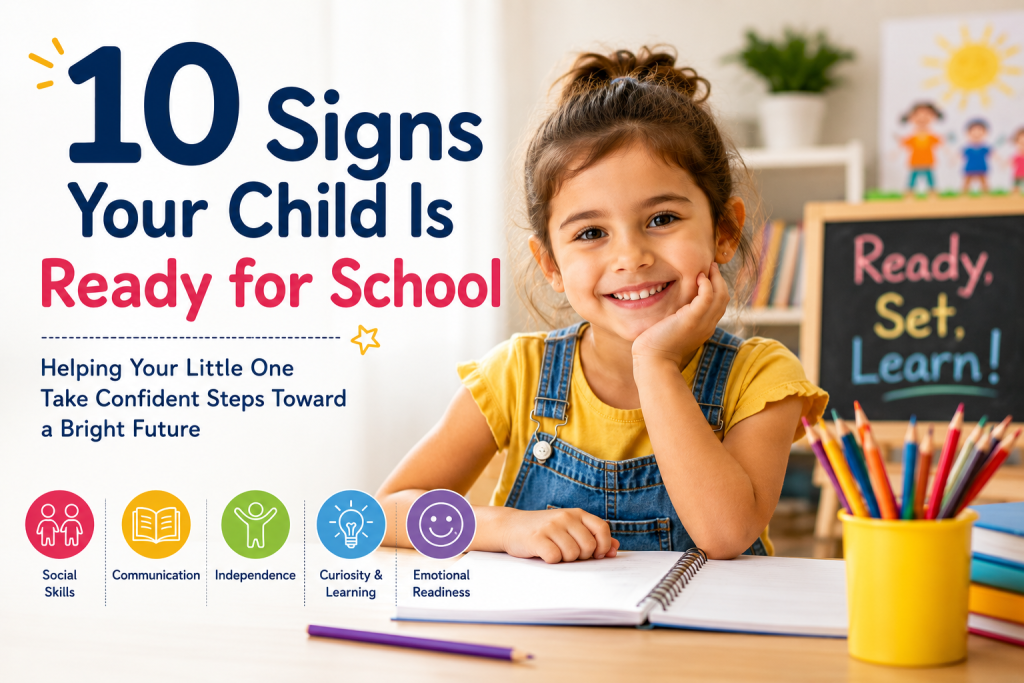
Starting school is an exciting milestone for both children and parents. While every child develops at their own pace, there are several indicators that can help you determine whether your child is ready to take the next step into formal education.
School readiness is about much more than knowing letters and numbers. It includes social skills, emotional development, communication abilities, independence, and the confidence to participate in a classroom environment. Quality early childhood education and care programs play a significant role in helping children build these essential foundations.
If you’re wondering whether your child is ready for school, here are 10 important signs to look for.
1. They Can Follow Simple Instructions
One of the key school readiness skills is the ability to listen and follow directions.
Children who can understand and complete simple instructions such as:
- Put your toys away
- Wash your hands before lunch
- Sit down for story time
are often better prepared for classroom routines.
Early learning environments help children develop listening skills through structured activities, group discussions, and guided play experiences.
2. They Can Communicate Their Needs Clearly
Children entering school should be able to express basic needs, thoughts, and feelings.
Examples include:
- Asking for help
- Explaining what happened
- Sharing ideas with others
- Participating in conversations
Strong language and communication skills support classroom learning and help children build positive relationships with teachers and peers.
3. They Demonstrate Independence
Independence is an important aspect of school readiness.
Your child may be ready for school if they can:
- Use the toilet independently
- Wash their hands
- Put on their shoes
- Pack away belongings
- Manage simple tasks without constant assistance
Preschool and childcare programs encourage children to develop confidence by practising self-help skills every day.
4. They Can Interact Positively with Other Children
School requires children to work, play, and learn alongside their peers.
Signs of positive social development include:
- Taking turns
- Sharing toys
- Cooperating during group activities
- Showing empathy
- Resolving minor conflicts appropriately
Children who attend a quality childcare centre often have regular opportunities to develop these essential social skills.
5. They Can Separate Comfortably from Parents
Although some nervousness is normal, children who are becoming school-ready generally cope with short separations from parents and caregivers.
Early learning environments provide valuable opportunities for children to build confidence in new settings while developing secure relationships with educators and friends.
6. They Can Focus on Activities for Short Periods
Young children are not expected to sit still for long periods. However, school-ready children can typically:
- Participate in story time
- Complete simple activities
- Engage in guided learning experiences
- Stay focused for age-appropriate periods
Attention and concentration skills develop gradually through play-based learning experiences and structured educational programs.
7. They Show Curiosity and a Desire to Learn
Curiosity is one of the strongest indicators of school readiness.
Children who are ready for school often:
- Ask lots of questions
- Explore new ideas
- Enjoy books and storytelling
- Show enthusiasm for learning
A child’s natural curiosity forms the foundation for lifelong learning and academic success.
8. They Have Emerging Literacy and Numeracy Skills
Children do not need to read or perform complex mathematics before starting school.
However, early signs of literacy and numeracy may include:
- Recognising some letters
- Identifying their name
- Understanding rhymes
- Counting simple objects
- Recognising basic shapes and colours
High-quality preschool programs introduce these concepts through engaging and age-appropriate learning experiences.
9. They Can Manage Their Emotions
Emotional regulation is a critical school readiness skill.
Children who are developing emotional maturity can often:
- Express feelings appropriately
- Handle minor disappointments
- Adapt to changes in routine
- Seek help when needed
Social and emotional development is strongly supported through nurturing early childhood education programs.
10. They Enjoy Participating in Group Activities
School involves working within a group environment for much of the day.
Children who are ready for school often enjoy:
- Group games
- Story sessions
- Collaborative projects
- Singing and movement activities
Participating in group experiences helps children develop confidence, cooperation, and a sense of belonging.
How Early Learning Supports School Readiness
A quality early learning program helps children develop the skills, confidence, and resilience needed for a successful transition to school.
Through play-based learning, children build:
- Communication skills
- Social development
- Emotional resilience
- Problem-solving abilities
- Early literacy and numeracy foundations
- Independence and self-confidence
These experiences prepare children not only for their first day of school but for their entire educational journey.
Choosing the Right Childcare and Preschool Environment
Parents searching for a childcare centre near me often look for programs that support both child development and school readiness.
When evaluating a childcare centre in Dural, consider factors such as:
- Qualified educators
- Play-based learning programs
- School readiness initiatives
- Safe and nurturing environments
- Strong family partnerships
- Opportunities for social and emotional development
A supportive early learning environment can make a significant difference in helping children feel confident and prepared for their transition to school.
Final Thoughts
Every child develops at their own unique pace, and school readiness is not defined by a single checklist. Instead, it is a combination of social, emotional, physical, and cognitive skills that help children thrive in a school setting.
By supporting your child’s development through quality early learning experiences, positive routines, and encouraging independence, you can help them approach this exciting milestone with confidence.
At Wiggles and Giggles Dural, we are committed to helping children build the skills, knowledge, and confidence they need for a successful transition to school through nurturing care, play-based learning, and comprehensive school readiness programs.
Frequently Asked Questions
What age should my child be before starting school?
School starting ages vary depending on state requirements. However, readiness is determined by developmental skills as much as age.
Does my child need to know how to read before starting school?
No. Schools expect children to enter with emerging literacy skills rather than fluent reading abilities.
How can childcare help prepare my child for school?
Quality childcare programs support communication, social skills, emotional development, independence, and early literacy and numeracy foundations that contribute to school readiness.
What are the most important school readiness skills?
Communication, emotional regulation, independence, social interaction, curiosity, and the ability to follow instructions are among the most important indicators of school readiness.


