
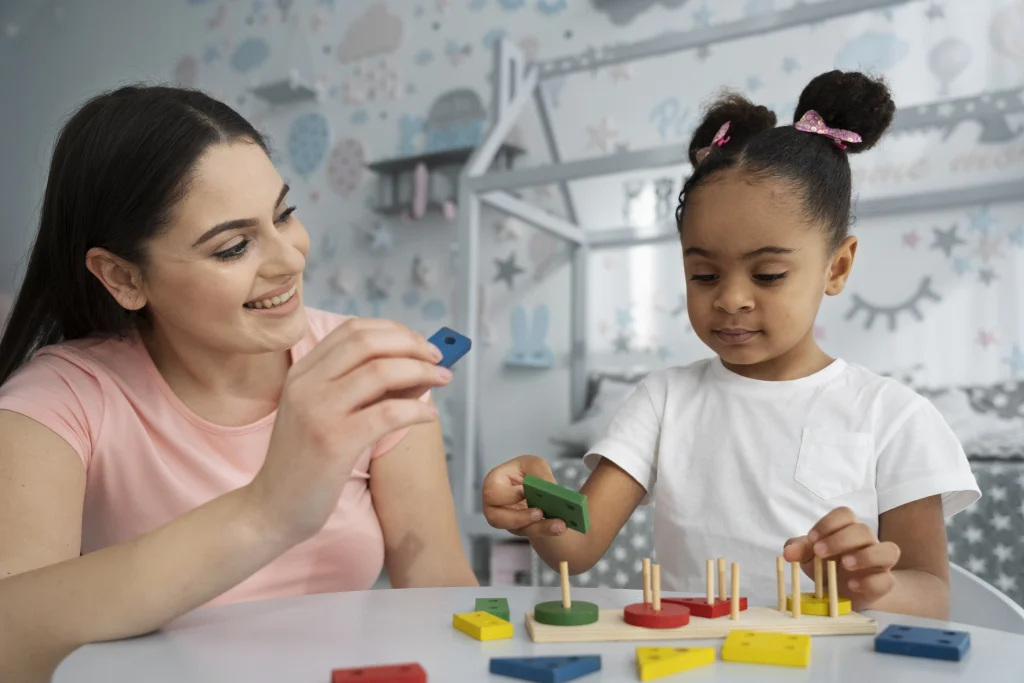
As a parent, you’ve probably heard the phrase “learning through play” more than once. And while it sounds lovely, it also makes you pause. Is it just free time dressed up as education? What are children really learning when they’re stacking blocks or pretending to run a shop? At Wiggles and Giggles early learning centres, play is not a filler between lessons. It is the lesson.
Let’s talk about what play-based learning really means, why it works, and how it shapes your child in ways that structured lessons simply cannot.
Why Play Matters More Than We Think
Play is the language of childhood. Before children can write essays or recite the alphabet, they explore, mimic, build, imagine, test boundaries and invent rules, all through play.
When children play, they are building skills that will support them for life. Emotional intelligence, resilience, creativity, critical thinking, problem solving and social confidence all begin here.
In fact, many experts believe that the earlier children are pushed into structured academics, the less they retain. Play, on the other hand, invites children to take ownership of their learning. They stay curious, engaged and happy.
What Play-Based Learning Looks Like
At a quality childcare in dural setting, play-based learning is intentionally designed. It’s not just about setting toys out and letting children roam.
You’ll see children:
- Building towers and learning about gravity
- Pretending to run a shop and developing early math and language skills
- Sorting objects by colour and learning patterns
- Caring for a doll and practicing empathy
- Digging in the garden and learning cause and effect
Each activity is open-ended and hands-on. Educators guide the experience with intention, asking questions, introducing new vocabulary and encouraging collaboration.
So yes, it might look like fun and games on the surface. But underneath, their brains are working overtime.
Emotional Development Through Play
Let’s talk about something we don’t always connect with play feelings.
Play is one of the safest ways children process emotions. Through imaginative play, they work out big feelings like fear, jealousy, excitement or uncertainty. They get to be the hero, the problem-solver, the nurturer or the explorer.
A dollhouse might become a way to talk through bedtime routines. A puzzle might teach persistence. A game of tag might help a child navigate boundaries and social cues.
At Wiggles and Giggles, play is not just encouraged, it’s respected. Educators understand that this is your child’s first and most important form of expression. Through play, children say what they often cannot yet put into words.
Social Learning Without Pressure
The first friendships your child forms often happen at Dural childcare centres. And these early social experiences shape how they relate to others for years to come.
Through play, children learn:
- How to take turns
- How to solve disputes
- How to share materials
- How to read body language and facial expressions
- How to lead and follow
The beauty of play is that it teaches these lessons in real time, not through lectures or rules. Children learn social grace not because they’re told, but because it feels better to cooperate and be included.
And when an educator is gently guiding from the sidelines, stepping in only when necessary, children feel empowered to navigate social situations with confidence.
Building Confidence in Their Own Time
One of the overlooked benefits of play-based learning is the impact it has on a child’s self-esteem. When a child is allowed to explore, choose, create and discover without fear of getting it wrong, they learn to trust themselves.
There’s no test to fail. No red pen. Just curiosity and feedback from real experiences.
This is particularly powerful in the early years, when children are still forming their sense of self. In structured programs that don’t allow for choice, a child may quickly learn to doubt themselves. But in play-based settings, they learn that their ideas matter.
The result? Confident kids who are ready to take on the world, one puzzle, one game, one story at a time.
Preparing for School, and Life
Some parents worry that play-based learning will leave their child unprepared for school. But the truth is the opposite.
Children from strong daycare centres that use play as the foundation often enter school with stronger attention spans, better emotional regulation, and more advanced language and problem-solving skills.
They know how to sit in a group, ask questions, negotiate friendships and follow a routine, not because they were drilled, but because they’ve experienced it all naturally through play.
At wiggles and giggles, school readiness is woven into play. Counting bears teach math. Storytime builds literacy. Games teach strategy and focus. And group play teaches leadership and empathy.
The Role of the Educator in Play
Educators in play-based environments are not passive. They observe closely, notice what each child is drawn to, and provide materials and prompts to stretch thinking.
They might ask, “What do you think will happen if we add water to the sand?” or “Can you tell me about the tower you built?”
These small, open-ended questions keep children thinking, reflecting and exploring further. The best educators know when to step in and when to stand back, a balance that keeps learning both child-led and educator-supported.
Choosing a Centre That Values Play
Not all early learning centres approach play in the same way. When visiting a centre, ask how they use play in their daily routine. Look for environments with:
- Open-ended materials
- Lots of time for free exploration
- Spaces for quiet play and social play
- Educators who engage with curiosity and warmth
Listen to how staff speak about children’s learning. If they talk about play as meaningful, intentional and developmental, you’re in the right place.
At wiggles and giggles, parents often comment on how much their children grow not just academically, but socially and emotionally too, and it all starts with play.
Final Thoughts
You want your child to be happy, confident and ready for the next chapter. You want them to be curious, kind and capable. That foundation doesn’t come from worksheets or memorisation. It comes from play.
Play is not a break from learning. It is learning. When you choose a centre that honours this, you’re giving your child something powerful, the freedom to learn in the way their brain is wired to grow.
Whether you’re just beginning your search for childcare in Dural or already enrolled at a trusted Dural childcare location like Wiggles and Giggles, take comfort in knowing that when your child plays with purpose, their future is being built, one joyful moment at a time.


