
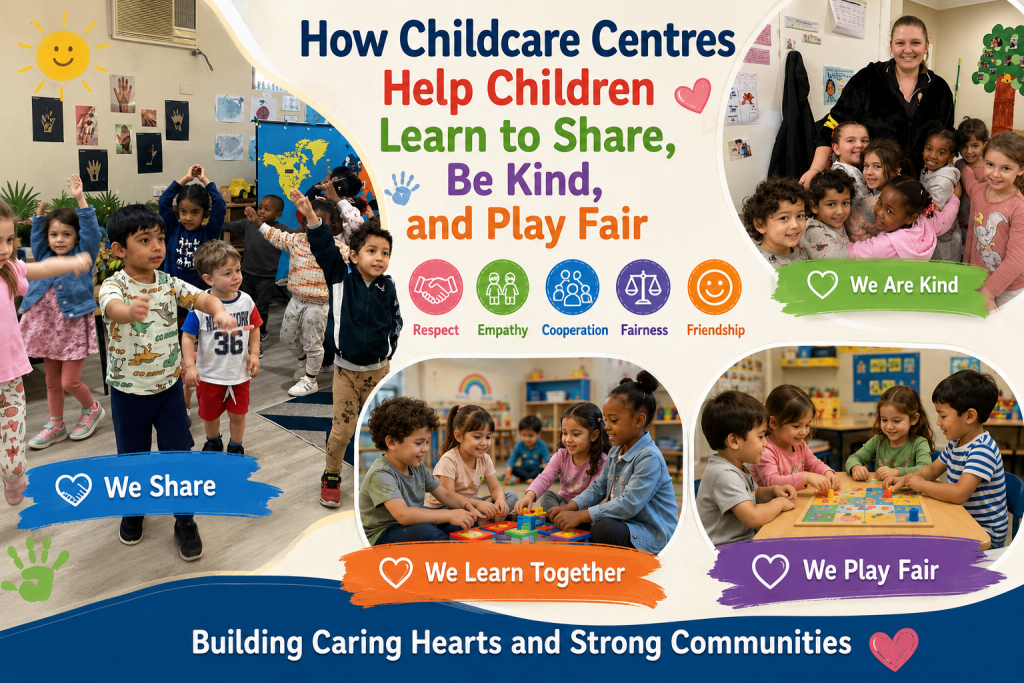
Parents want their children to grow into caring, confident, and respectful individuals. A quality kellyville childcare centre plays a big role in helping children develop these important social skills from an early age. At Wiggles and Giggles, children are encouraged to build friendships, understand emotions, and learn positive behaviour through everyday experiences. Early childhood educators create a safe and welcoming environment where children discover how to share, cooperate, and treat others with kindness.
Building Positive Social Skills in Early Childhood
Young children learn social behaviour through interaction and observation. In a childcare environment, they spend time with children from different backgrounds, personalities, and age groups. This helps them understand the importance of communication, patience, and teamwork. Educators guide children during group activities, teaching them how to listen, take turns, and express their feelings respectfully.
Children are naturally curious and energetic, so conflicts can sometimes happen during play. Instead of simply solving the problem for them, educators encourage children to talk through their feelings and find fair solutions. These small lessons help children develop emotional intelligence and confidence in social situations.
Encouraging Kindness Through Daily Activities
A nurturing dural early learning centre helps children understand the value of kindness through everyday routines and play-based learning. Simple actions such as helping a friend clean up toys, comforting someone who feels upset, or working together during activities teach empathy and compassion. Educators model positive behaviour by speaking respectfully, showing patience, and encouraging supportive interactions among children.
Storytelling, music, and role-play activities are also effective ways to teach kindness. Children learn how their actions affect others and begin to understand emotions like happiness, sadness, and frustration. These experiences help children become more thoughtful and caring individuals both inside and outside the classroom.
Learning the Importance of Sharing
Sharing does not always come naturally to young children. Many children are still learning how to manage emotions and understand fairness. Childcare centres provide structured opportunities for children to practice sharing during group games, creative activities, and free play sessions.
Educators gently guide children through situations where they may need to wait for a turn or use toys together. Over time, children begin to understand that sharing can create positive experiences and stronger friendships. This helps reduce frustration and encourages cooperative behaviour.
Activities such as building blocks together, painting as a group, or participating in sensory play also encourage collaboration. These experiences teach children that teamwork can be enjoyable and rewarding.
Helping Children Understand Fair Play
At a quality prestons Early Learning centre, fair play is introduced through games, sports, and group learning experiences. Children learn simple rules, understand boundaries, and discover why fairness matters during interactions with others. Educators encourage honesty, respect, and inclusion during play activities.
When children participate in group games, they begin to understand the importance of taking turns and supporting teammates. These experiences help them build patience and resilience. Children also learn how to handle winning and losing in a positive and respectful way.
Fair play also teaches children problem-solving skills. When disagreements happen, educators help children communicate calmly and work toward fair outcomes. These lessons support healthy emotional development and prepare children for future social situations at school and in life.
Role of Educators in Teaching Social Behaviour
Educators play a major role in shaping children’s social and emotional growth. Their guidance helps children feel secure, valued, and respected. Positive reinforcement is commonly used to encourage good behaviour and build self-confidence.
A supportive childcare environment allows children to express themselves freely while learning boundaries and responsibility. Educators carefully observe children’s interactions and provide support when needed. They create activities that encourage teamwork, communication, and cooperation.
Children often learn by watching adults. When educators demonstrate kindness, patience, and fairness, children naturally begin to imitate those behaviours in their own interactions.
Group Activities That Promote Cooperation
A trusted Childcare Services prestons program includes many group-based activities that support social development. These activities encourage children to communicate, collaborate, and build friendships in a fun and engaging environment.
Group art projects teach children to share materials and appreciate each other’s ideas. Outdoor games help children understand teamwork and fair play. Music and dance activities encourage children to participate together while developing confidence and coordination.
Cooking activities, storytelling circles, and imaginative play areas also support social learning. Children develop communication skills as they work together, ask questions, and express ideas during these experiences.
Emotional Development and Friendship Building
Friendships are an important part of childhood development. Through positive friendships, children learn trust, cooperation, and emotional understanding. Childcare centres provide children with daily opportunities to connect with peers and build meaningful relationships.
Children who feel emotionally supported are more likely to develop confidence and independence. Educators help children identify emotions and communicate feelings appropriately. This guidance helps children manage frustration, disappointment, and excitement in healthy ways.
As children become more comfortable interacting with others, they gain stronger social skills that benefit them throughout life. They learn how to support friends, resolve disagreements, and celebrate shared achievements.
Creating a Safe and Inclusive Environment
A welcoming childcare environment helps every child feel accepted and respected. Inclusion teaches children to appreciate differences and treat others fairly. Educators encourage children to participate in activities together regardless of their abilities, backgrounds, or personalities.
Inclusive environments also help children build confidence and a sense of belonging. When children feel safe and valued, they are more willing to engage with others and try new experiences. This positive atmosphere supports emotional wellbeing and encourages respectful behaviour.
Children also learn important values such as patience, compassion, and understanding when they interact with diverse groups of peers.
Play-Based Learning Supports Social Growth
Play-based learning is one of the most effective ways for children to develop social skills naturally. During play, children communicate ideas, solve problems, and cooperate with others. These interactions help children practice sharing, negotiation, and teamwork in meaningful ways.
Pretend play activities are especially helpful for social development. Children take on different roles, explore emotions, and practice communication through imaginative scenarios. Whether they are pretending to run a shop, care for dolls, or build a city with blocks, children are learning valuable social lessons.
Outdoor play also contributes to emotional and social development. Group games and physical activities teach children how to work together, follow instructions, and encourage others.
Preparing Children for School and Life
The social skills children develop in early childhood help prepare them for future learning environments. Children who understand kindness, cooperation, and fair play often adjust more confidently to school routines and classroom expectations.
Learning to listen, communicate, and work with others also supports academic development. Children who can manage emotions and build friendships are better equipped to participate in group learning and classroom discussions.
These early experiences continue to shape children as they grow. Skills such as empathy, teamwork, and respect become important throughout school, relationships, and future careers.
Partnering with Families for Positive Development
Childcare centres work closely with families to support children’s social and emotional growth. Open communication between educators and parents helps create consistency between home and childcare routines.
Families are encouraged to reinforce positive behaviour at home by modelling kindness, patience, and respectful communication. When children see the same values practiced in different environments, they develop a stronger understanding of positive social behaviour.
Parents also benefit from regular updates about their child’s progress, friendships, and learning experiences. This partnership creates a supportive environment where children can thrive emotionally and socially.
Why Early Social Learning Matters
Teaching children to share, be kind, and play fair during early childhood creates a strong foundation for lifelong success. These social skills support healthy relationships, emotional wellbeing, and positive communication throughout life.
Children who learn empathy and cooperation at a young age are more likely to become confident and respectful individuals. They develop stronger problem-solving abilities and learn how to navigate social situations with understanding and patience.
At Wiggles and Giggles, families looking for a trusted kellyville childcare centre can find a caring environment where children are encouraged to build friendships, develop confidence, and learn important social values every day. Through play, positive guidance, and engaging activities, children gain the skills they need to become kind, respectful, and fair-minded individuals.


