
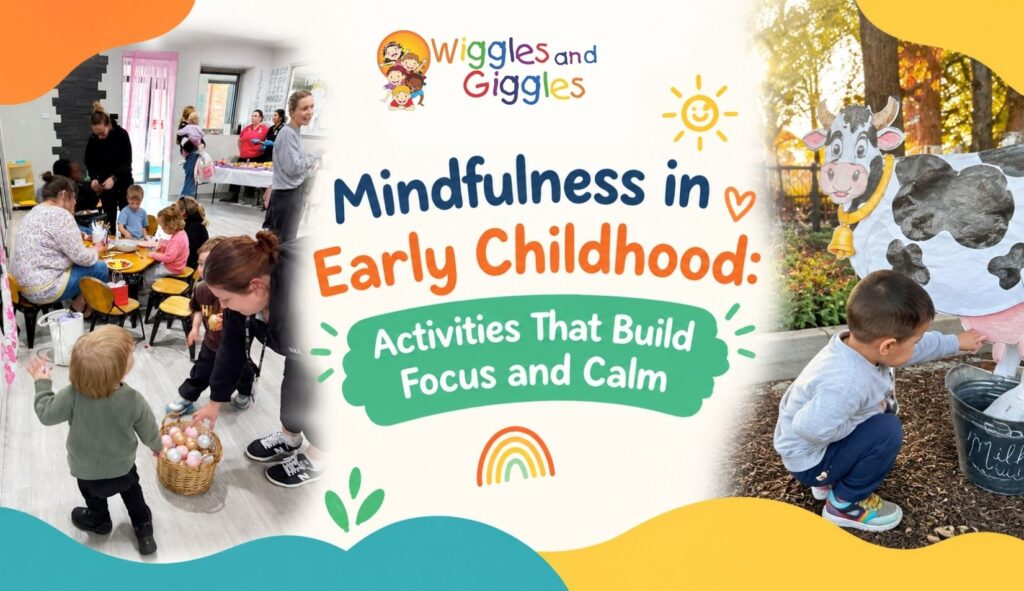
Young children experience many emotions throughout the day, from excitement and curiosity to frustration and tiredness. A supportive Childcare Service in Dural can help children learn simple ways to recognise these feelings and respond calmly. Mindfulness introduces children to the practice of paying attention to the present moment through breathing, movement, listening and gentle observation. These simple experiences can encourage children to slow down, focus on what they are doing and become more aware of their thoughts and feelings.
What Is Mindfulness for Young Children?
Mindfulness means being aware of what is happening in the present moment without immediately reacting to it. For young children, this does not need to involve long periods of sitting quietly. Instead, educators can introduce mindfulness through short, playful activities that suit children’s ages and interests.
For example, children might pause to notice the sounds around them, take a few slow breaths or observe how their body feels after physical activity. These experiences help children develop awareness in a way that feels natural and enjoyable.
Mindfulness can also be incorporated into everyday routines. A quiet moment before lunch, a breathing exercise after active play or a short listening activity during group time can provide opportunities for children to practise being present.
Simple Breathing Activities
Breathing activities are one of the easiest ways to introduce mindfulness to young children. Educators can make them fun by using imaginative ideas. Children might pretend to smell a flower while taking a slow breath in and blow gently on an imaginary candle while breathing out.
Another activity is “balloon breathing.” Children imagine that their tummy is a balloon. They slowly breathe in to make the balloon bigger and gently breathe out to let the air escape.
These activities encourage children to notice their breathing and create a short pause before responding to emotions. With regular practice, breathing can become a familiar strategy children use when they need a moment to settle.
Mindful Listening Games
Children are naturally curious about sounds, making listening games a simple mindfulness activity. Educators can ask children to close their eyes or sit quietly and listen carefully to what they can hear.
They may notice birds outside, footsteps, voices, wind, music or everyday classroom sounds. Afterward, children can discuss what they heard and where they think each sound came from.
This activity encourages concentration while helping children understand that there are many details they may miss when they are busy or distracted. It can also create a calm transition between different parts of the day.
Mindful Movement and Stretching
Mindfulness does not always mean staying still. Gentle movement can help children become more aware of their bodies while developing balance and coordination.
Simple stretching, slow walking, child-friendly yoga poses and guided movements can encourage children to notice how their bodies feel. Educators can ask questions such as, “How does your body feel when you stretch your arms?” or “Can you feel your feet touching the floor?”
Combining movement with awareness allows children to explore mindfulness in an active and age-appropriate way. It can be particularly useful after energetic activities when children are preparing to move into a quieter learning experience.
Nature-Based Mindfulness
Outdoor environments provide many opportunities for children to practise mindfulness. A garden walk can become an observation activity where children look closely at leaves, flowers, insects, textures and colours.
Educators might encourage children to listen to birds, feel the breeze or notice the different shapes they see around them. These simple experiences support curiosity and encourage children to focus their attention on their surroundings.
Creative activities can encourage children to concentrate on one task while expressing their ideas. Drawing, painting, clay work and sensory activities can become mindful experiences when children are encouraged to focus on the process rather than completing a particular result.
Educators can invite children to notice the colours they are using, the texture of materials or the movement of their hands. There is no need for the activity to be complicated. Even a few quiet minutes of focused creative play can help children practise sustained attention.
This approach connects naturally with early childhood education, where learning experiences can support children’s social, emotional, physical and cognitive development. Mindfulness activities can become part of a broader learning environment that encourages children to understand themselves and interact positively with others.
Mindful Storytelling and Quiet Moments
Stories can also introduce mindfulness concepts in an engaging way. Educators can choose stories about emotions, friendship, patience or managing challenges. After reading, children can talk about how a character felt and what helped them respond to a difficult situation.
Quiet reflection can follow the story. Children might take a few breaths, think about something they enjoyed during the day or simply sit comfortably for a short period.
These moments help children develop emotional vocabulary and recognise that different feelings are a normal part of everyday life.
Creating Mindful Routines at Home and Childcare
Mindfulness becomes more meaningful when children experience it consistently. Parents and educators can work together to introduce simple practices during everyday routines.
At home, families might practise taking three slow breaths before bedtime or spend a few minutes talking about something they noticed during the day. In childcare settings, educators can include breathing, listening, movement and observation activities within regular routines.
For families looking for a Long Daycare in Dural, it can be helpful to consider how a centre supports children’s emotional development alongside everyday learning and care. A welcoming environment with predictable routines and responsive educators can give children opportunities to practise self-awareness and calm behaviour throughout the day.
Supporting Mindfulness at Wiggles and Giggles
At Wiggles and Giggles, mindfulness can be incorporated into children’s everyday experiences through age-appropriate activities, meaningful interactions and opportunities for quiet reflection. Children can explore breathing, movement, nature, creative play and group discussions while developing confidence in expressing their thoughts and feelings.
The goal is not to expect young children to remain perfectly still or calm at all times. Instead, mindfulness can give them simple tools to recognise emotions, pause when needed and refocus their attention. When these practices are introduced through play and positive relationships, children can gradually develop greater awareness of themselves and the world around them.
Frequently Asked Questions
At what age can children start mindfulness?
Mindfulness can be introduced during the early years through simple activities such as breathing games, mindful movement, listening exercises and nature observation. Activities should be short, playful and appropriate for the child’s developmental stage.
How can mindfulness help children?
Mindfulness activities can encourage children to develop attention, self-awareness and emotional understanding. They can also provide simple strategies for pausing and calming down during challenging moments.
Can parents practise mindfulness with children at home?
Yes. Families can use everyday moments such as bedtime, outdoor walks, meals or quiet play to introduce simple mindfulness practices. Even a few minutes of focused attention can become a useful routine.
How can educators introduce mindfulness into daily routines?
Educators can introduce mindfulness through short breathing exercises, mindful listening, gentle movement, sensory play and quiet reflection. These activities can be included naturally during transitions, group time or after active play without making them feel like a separate lesson.
Does mindfulness support children’s social development?
Yes. Mindfulness can help children become more aware of their feelings and reactions. As children learn to pause and recognise emotions, they may find it easier to communicate their needs, listen to others and participate positively in group activities.


