
For most parents, early learning is a new and sometimes confusing concept. Simply put, early learning refers to the basic education and knowledge that children acquire before entering formal school. These years—typically between birth and age five—are crucial because children’s brains grow rapidly. The way they play, communicate, and learn during this period shapes their future learning, behaviour, and health.
When parents search for an early learning centre in Dural, they are usually looking for a safe, caring, and nurturing environment where their children can develop. In recent years, technology has become a significant part of our lives—and has also begun to influence children’s early years of education. From tablet-based learning programs to digital storytelling, technology can offer incredible opportunities. The challenge lies in achieving the right balance.
This blog explores the use of technology in early childhood education, its advantages and challenges, and why outdoor play remains an essential part of every child’s development.
Learning About Technology in Early Childhood Education
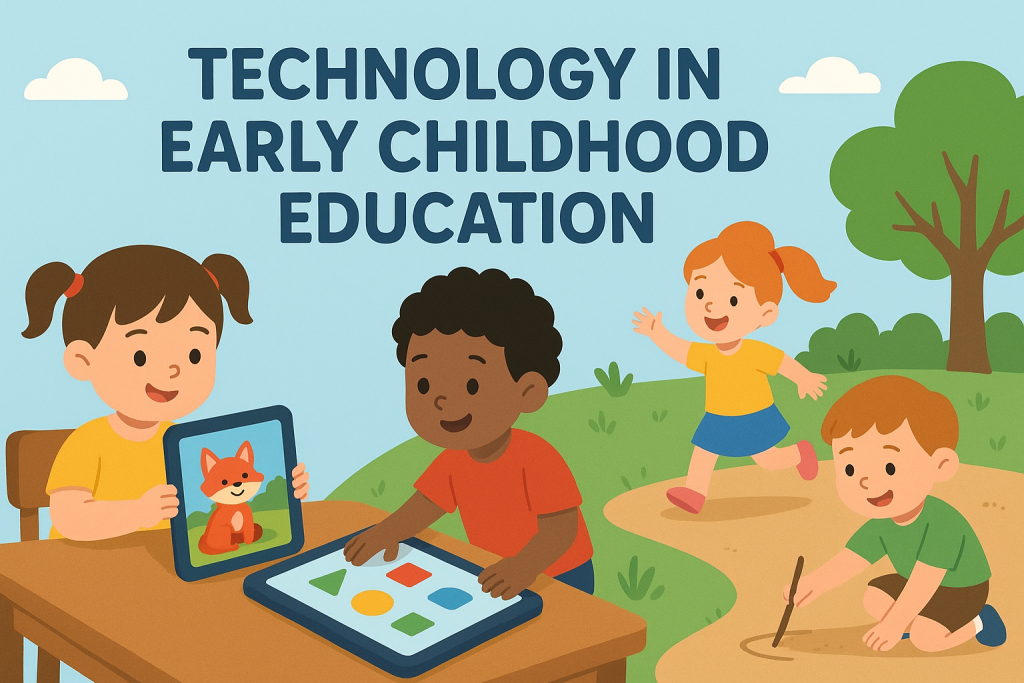
Technology in early learning is not simply about screens. It includes computers, tablets, smart boards, and educational software that allow children to engage with numbers, letters, sounds, and problem-solving. Educators in a modern childcare centre or day care centre often integrate these digital tools in ways that are engaging and stimulating.
For example, a children’s book app can bring stories to life with animations and voiceovers, enhancing the reading experience. Similarly, a drawing app can encourage creativity in children who may be hesitant to express themselves through pencils or paints.
However, technology should never replace hands-on learning, social interaction, or outdoor play. Instead, it should complement these activities, giving children a balanced experience of real-world exploration and digital learning.
Advantages of Technology in Early Learning
1. Engaging and Enjoyable Learning
Children are naturally curious. Technology can make learning fun and engaging by transforming abstract concepts into interactive experiences. For instance, apps that teach numbers or the alphabet through games help children learn without pressure.
2. Catering to Different Learning Styles
Every child learns differently. Some children prefer visual aids, while others respond better to sound or movement. Technology can cater to these needs by offering a variety of learning methods—whether through music, videos, or interactive play.
3. Developing Early Digital Literacy
In today’s world, digital literacy is essential. Introducing children to age-appropriate technology helps them become familiar with the tools they will eventually use in school and beyond. This doesn’t mean hours of screen time, but rather short, intentional exposures.
4. Encouraging Creativity
Technology also nurtures creativity. Children can compose music, design artwork, or tell stories using apps and digital platforms. These activities expand imagination and build problem-solving skills.
Challenges of Technology in Early Childhood Learning
1. Concerns About Screen Time
One of the biggest concerns for parents is excessive screen use. Research suggests that children under five should have limited screen exposure, as too much can affect sleep, physical activity, and socialisation.
2. Reduced Physical Play
When children spend more time on devices, they may miss out on outdoor play, which is critical for motor development and physical growth. That’s why a balanced early learning centre in Dural ensures children spend plenty of time outdoors.
3. Risks to Social Development
Children develop communication skills, empathy, and social understanding through interaction with peers and adults. Excessive reliance on screens can limit these opportunities. Technology, therefore, must be balanced with group play and social learning.
The Key Role of Outdoor Play in Early Learning
While technology has its benefits, outdoor play remains one of the most valuable aspects of early childhood education. At any quality day care centre or childcare centre, outdoor play is not simply a break—it’s an essential learning experience.
1. Physical Development
Outdoor play supports gross motor skills through running, climbing, jumping, and balancing. These activities build muscle strength, coordination, and resilience, all of which are vital for healthy growth.
2. Mental Well-being
Outdoor activities reduce stress, boost mood, and improve concentration. Children who regularly spend time outdoors often show greater emotional stability and resilience.
3. Creativity and Imagination
Outdoor environments inspire imaginative play. A stick becomes a magic wand, sand turns into a castle, and leaves transform into treasures. These moments of creativity foster critical thinking and problem-solving.
4. Connection with Nature
Outdoor play introduces children to the natural world, encouraging curiosity about plants, animals, weather, and seasons. It also builds an early sense of environmental responsibility.
5. Social Skills and Teamwork
Group play outdoors—such as tag, building, or shared adventures—helps children learn cooperation, sharing, negotiation, and leadership skills.
Finding a Balance Between Technology and Outdoor Play
The question for parents and educators is not whether technology is good or bad, but how it is used. A balanced approach ensures children benefit from both worlds.
- Purposeful use: Technology is introduced with a clear educational purpose, not just entertainment.
- Limited exposure: Children have short, controlled sessions with technology to prevent overuse.
- Blended learning: Digital tools are combined with books, toys, art, and outdoor experiences.
- Outdoor priority: Physical play continues to be a central part of the daily routine at a day care centre.
This balance ensures children remain engaged with technology while still enjoying the many benefits of active play and real-world learning.
How Parents Can Encourage Balanced Learning at Home
Parents also play a vital role in managing children’s technology use. Here are some practical strategies:
- Set limits: Restrict the amount of time spent on devices.
- Choose wisely: Opt for educational apps, games, and programs tailored to early learners.
- Get involved: Share digital activities with your child to make them interactive learning experiences.
- Encourage offline activities: Balance screen use with board games, art projects, and outdoor adventures.
- Be a role model: Demonstrate healthy technology use by limiting your own screen time in front of your child.
The Role of the Childcare Centre in Technology Use
When selecting a childcare in Dural, parents should ask how technology is incorporated into the curriculum. A quality centre will:
- Use technology as a supportive tool, not a replacement for play.
- Prioritise outdoor and hands-on activities.
- Provide age-appropriate and educational digital content.
- Equip educators with training to guide children’s technology use responsibly.
This ensures children enjoy the benefits of technology without losing the developmental value of active play and social interaction.
Conclusion
Technology can play a positive role in early development, offering interactive and engaging opportunities for learning. However, it should never replace outdoor play, imagination, and face-to-face social interaction. A balanced approach—where children enjoy structured digital experiences alongside active outdoor exploration—helps them grow into confident, creative, and well-rounded individuals.
For families who want the very best start for their children, Wiggles and Giggles is the leading early learning centre in Dural. With a focus on play-based learning, outdoor exploration, and the mindful use of technology, Wiggles and Giggles nurtures young minds to develop the skills, confidence, and love for learning that will last a lifetime.


