
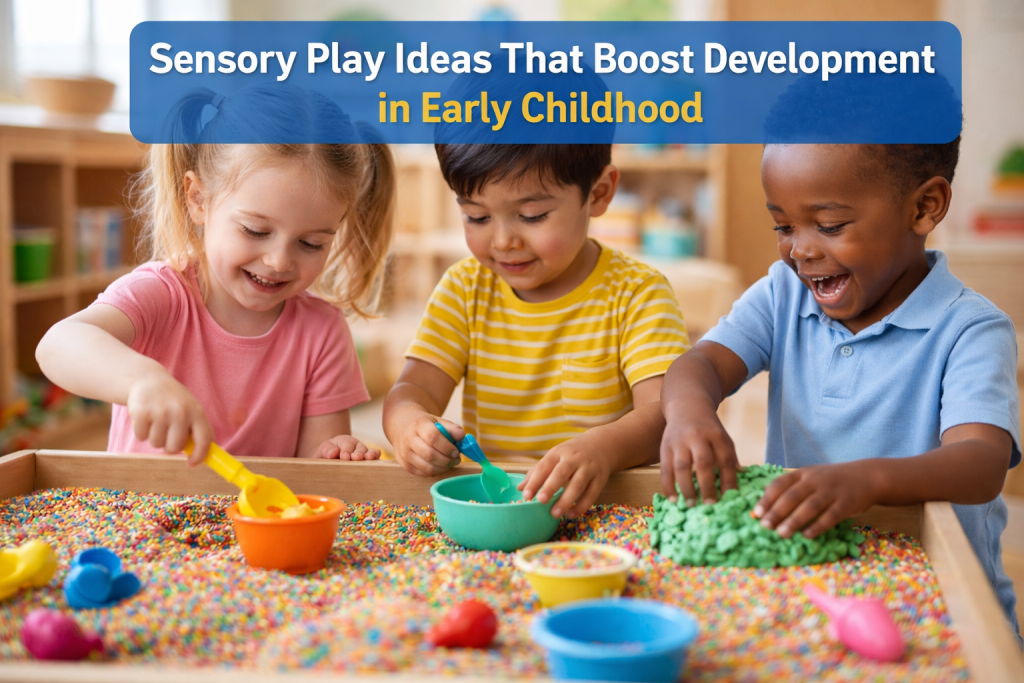
Sensory play is one of the most powerful ways young children learn about the world around them. From squishing playdough to splashing water, sensory experiences support brain development, emotional regulation, motor skills and early learning foundations. That’s why high-quality childcare in Prestons and trusted day care programs intentionally include sensory play in their daily routines.
This guide explains what sensory play is, why it matters, and practical sensory play ideas that support children’s development both in childcare settings and at home.
What Is Sensory Play?
Sensory play refers to activities that stimulate one or more of the five senses:
- Touch (tactile experiences)
- Sight (visual stimulation)
- Sound (auditory exploration)
- Smell
- Taste
In early childhood education, sensory play also supports the vestibular system (balance and movement) and proprioception (body awareness). These systems are essential for physical coordination, attention, and emotional self-regulation.
Quality day care in Prestons programs design sensory activities that are age-appropriate, safe, and open-ended, allowing children to explore freely at their own pace.
Why Sensory Play Is Essential for Child Development
1. Supports Brain Development
Sensory experiences create neural connections in the brain. When children explore textures, sounds, and movement, their brains are actively processing information and building pathways that support memory, problem-solving and learning.
2. Builds Fine and Gross Motor Skills
Activities like pouring rice, squeezing sponges or crawling through tunnels strengthen muscles and improve coordination. These skills are essential for writing, dressing, and independent play.
3. Encourages Emotional Regulation
Sensory play has a calming effect for many children. Activities such as water play or sand play can help children manage big emotions and reduce anxiety.
4. Enhances Language Development
As children describe what they feel, see or hear, they build vocabulary and communication skills. Educators in childcare in Prestons often model language during sensory play to encourage expressive speech.
5. Supports Inclusive Learning
Sensory play is especially beneficial for children with additional needs, learning differences, or sensory processing challenges, making it a vital component of inclusive day care environments.
Sensory Play Ideas That Boost Development
1. Tactile Sensory Play (Touch-Based Activities)
Examples:
- Playdough, clay or slime
- Sensory bins filled with rice, pasta, sand or soil
- Fabric baskets with different textures (soft, rough, smooth)
Developmental Benefits:
- Strengthens fine motor skills
- Improves hand-eye coordination
- Encourages creativity and exploration
Educators in childcare often rotate tactile materials to keep children engaged while supporting different developmental stages.
2. Water Play Experiences
Examples:
- Pouring stations with cups and funnels
- Floating and sinking experiments
- Sponge squeezing and water painting
Developmental Benefits:
- Introduces early maths and science concepts
- Builds muscle strength and coordination
- Supports calm, focused play
Water play is a staple in many day care in Prestons centres, especially during outdoor learning sessions.
3. Sensory Art and Creative Play
Examples:
- Finger painting
- Ice painting
- Painting with sponges, leaves or toy cars
Developmental Benefits:
- Encourages self-expression
- Develops fine motor control
- Strengthens emotional confidence
Sensory art allows children to focus on the process rather than the outcome, which is a key principle of play-based learning in childcare in Prestons.
4. Auditory Sensory Play (Sound Exploration)
Examples:
- Homemade musical instruments
- Listening walks outdoors
- Rhythm and movement games
Developmental Benefits:
- Improves listening and attention skills
- Supports language and memory
- Enhances pattern recognition
Sound-based sensory play is often integrated into group activities in day care in Prestons programs to support social interaction.
5. Visual Sensory Activities
Examples:
- Colour sorting trays
- Light tables with shapes
- Shadow play using torches
Developmental Benefits:
- Supports visual tracking and focus
- Introduces early literacy and numeracy concepts
- Encourages curiosity and problem-solving
Visual sensory play is especially effective for toddlers and preschoolers in structured childcare in Prestons environments.
6. Sensory Movement and Body Awareness
Examples:
- Obstacle courses
- Yoga for children
- Balancing beams and stepping stones
Developmental Benefits:
- Improves balance and coordination
- Strengthens core muscles
- Builds confidence in physical abilities
Movement-based sensory play is essential in both indoor and outdoor learning spaces in day care in Prestons.
Sensory Play and Outdoor Learning
Outdoor sensory play provides rich, natural experiences that indoor environments cannot always replicate. Activities such as mud play, gardening, barefoot grass walks and nature scavenger hunts stimulate all senses simultaneously.
High-quality childcare in Prestons centres prioritise outdoor sensory learning to support physical health, resilience, and environmental awareness.
Safety and Hygiene in Sensory Play
While sensory play encourages exploration, safety remains essential. Best practices followed by reputable day care in Prestons include:
- Non-toxic, age-appropriate materials
- Close supervision at all times
- Regular cleaning and sanitising of equipment
- Allergy-aware activity planning
These measures ensure children can explore safely while gaining maximum developmental benefit.
How Parents Can Support Sensory Play at Home
Parents don’t need expensive equipment to encourage sensory learning. Simple household items can create meaningful experiences:
- Cooking together (measuring, mixing, smelling)
- Bath-time water play
- Nature walks collecting leaves or stones
- Sensory bottles using rice or glitter
Consistency between home and childcare helps children feel secure and confident in their learning.
Why Sensory Play Matters in Quality Childcare
Sensory play is not just “messy fun” — it is a scientifically supported approach to early learning. It helps children develop essential life skills, prepares them for school readiness, and supports emotional wellbeing.
Families looking for high-quality day care in Prestons should look for centres that intentionally embed sensory play into their daily programs, supported by trained educators and safe environments.
Final Thoughts
Sensory play plays a critical role in early childhood development. Through touch, movement, sound and exploration, children build the foundations for lifelong learning. Whether at home or in professional childcare, these experiences shape confident, capable and curious learners.
Choosing a day care in Prestons that values sensory learning ensures your child receives a balanced, developmentally supportive early education — one where it truly becomes the pathway to growth.


