
Starting preschool is an exciting milestone for children and families. Along with learning letters, numbers, and new concepts, children are also developing the social and emotional skills they need to participate confidently in a group environment.
Before their first day at a Prestons Early Learning Centre, parents can help children practise important skills such as sharing, communicating, taking turns, managing emotions, listening to others, and building friendships. These abilities can make the transition into an early learning environment feel more comfortable and familiar.
Whether your child is preparing for their first preschool experience or getting ready to move into a more structured learning environment, everyday activities at home can provide valuable opportunities to develop social confidence.
Here are five practical ways parents can support their child’s social skills before preschool.
1. Encourage Sharing and Turn-Taking
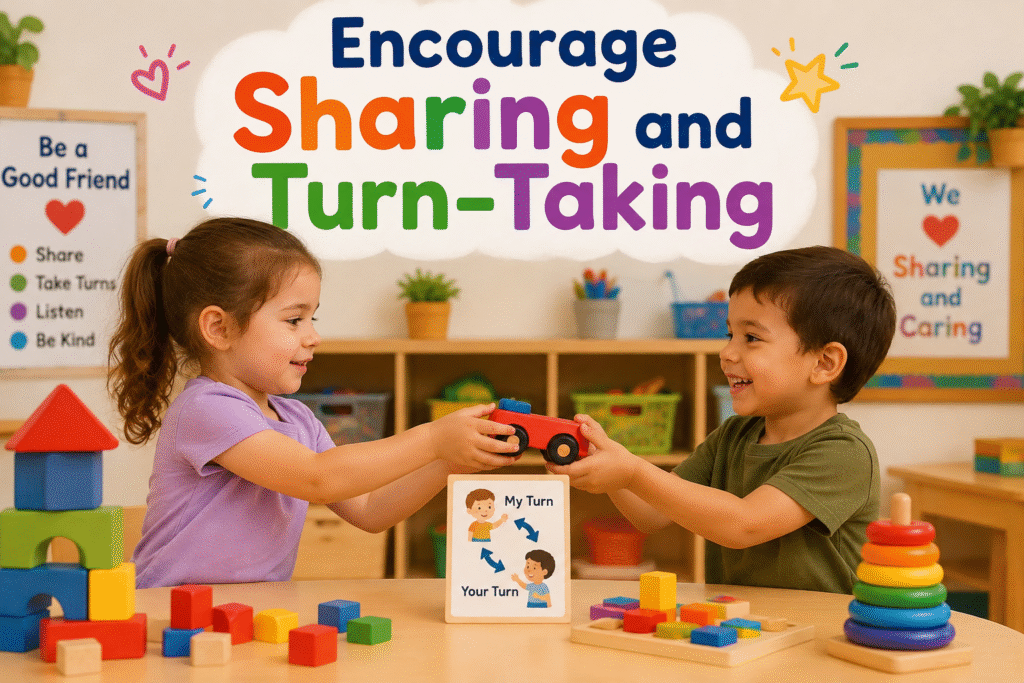
Sharing does not always come naturally to young children. For toddlers and preschoolers, toys and other possessions can feel very personal, so expecting them to immediately share everything can sometimes create frustration.
Instead, parents can introduce turn-taking through simple everyday games and activities.
For example, you could:
- Take turns building a tower with blocks.
- Play simple board or matching games.
- Take turns choosing a story at bedtime.
- Share art materials during a creative activity.
- Use phrases such as “Your turn, then my turn.”
These activities help children understand that they may need to wait for someone else before having another turn.
Parents can also model sharing in everyday situations. Saying, “I’ll share this with you, and then you can share with me,” gives children a practical example of cooperation.
The goal is not to force children to give up something they are using. Instead, children can gradually learn that taking turns allows everyone to participate.
Why turn-taking matters
Turn-taking is an important part of social development in early childhood. It supports patience, cooperation, listening, and an understanding of other people’s needs.
These skills become particularly useful when children begin participating in group activities with educators and other children.
2. Help Your Child Practise Communicating Their Feelings
Being able to communicate emotions is an important part of building positive relationships.
Young children may experience strong emotions but not always have the words to explain what they are feeling. This can sometimes result in crying, shouting, withdrawing, or becoming frustrated.
Parents can help by giving children simple words to describe their emotions.
For example:
- “You look frustrated because the tower fell down.”
- “Are you feeling worried about trying something new?”
- “It looks like you’re excited to see your friend.”
- “You seem upset because you wanted another turn.”
Naming emotions helps children gradually connect feelings with words.
You can also use books, toys, or everyday situations to talk about how other people might feel. Ask questions such as, “How do you think the character feels?” or “What could we do to help?”
This encourages emotional awareness, empathy, and communication.
Make space for conversations
Children do not need complicated lessons to develop communication skills. Everyday conversations during meals, walks, bath time, or story time can help.
Give your child time to answer questions rather than immediately responding for them. Listening carefully shows children that their thoughts and feelings are important.
3. Create Opportunities for Positive Social Interaction
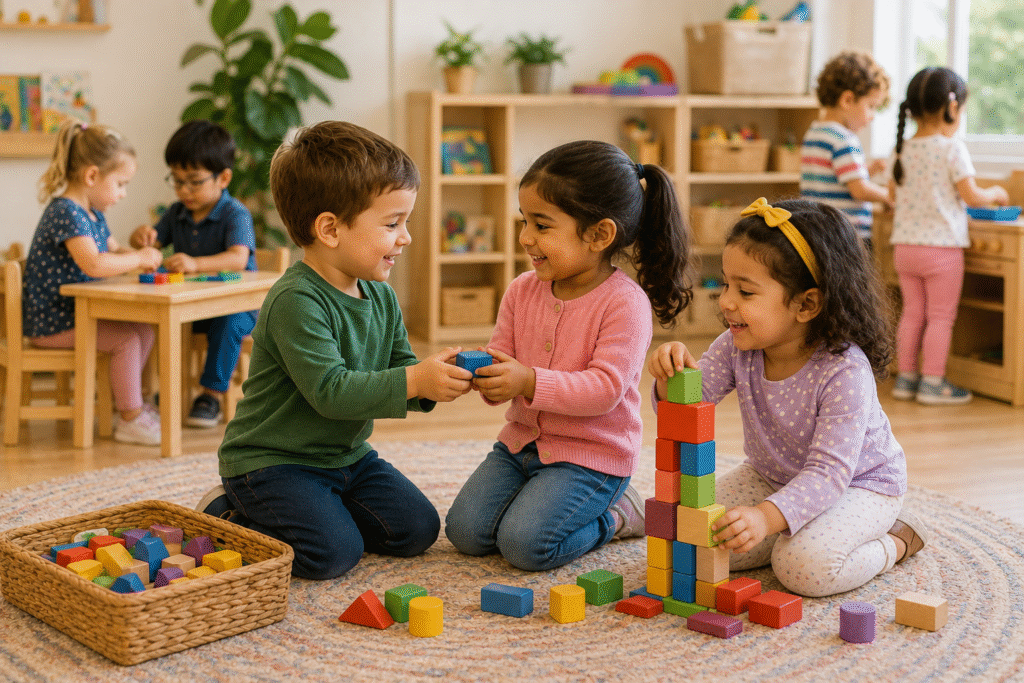
Children learn many social skills through interacting with other children.
Before preschool begins, parents can provide opportunities for children to play with siblings, cousins, neighbours, or friends. Even short play sessions can help children practise communication and cooperation.
Try activities where children have a shared goal, such as:
- Building a block structure together.
- Creating a pretend shop.
- Drawing a large picture together.
- Playing with a ball.
- Completing a simple puzzle as a group.
- Creating a pretend meal in a play kitchen.
During these experiences, children may need to negotiate roles, share resources, listen to ideas, and solve small disagreements.
Parents do not need to intervene in every disagreement. When appropriate, give children an opportunity to try solving minor problems themselves while remaining nearby to offer support.
For families searching for childcare near me, it can also be helpful to consider how prospective centres encourage peer interaction, collaborative activities, and relationship-building as part of their daily program.
4. Teach Simple Ways to Handle Conflict
Disagreements are a normal part of childhood. Two children may want the same toy, disagree about the rules of a game, or have different ideas about what to play.
Rather than trying to prevent every conflict, parents can help children develop simple strategies for managing disagreements.
Teach phrases such as:
- “Can I have a turn when you’re finished?”
- “I don’t like that.”
- “Let’s take turns.”
- “Can we play together?”
- “Can you help me?”
- “Let’s find another one.”
Role-playing these situations at home can make it easier for children to use the phrases when they encounter a real disagreement.
Parents can also demonstrate calm problem-solving. For example, if two children want the same toy, you might say, “You both want the truck. What could we do so everyone gets a turn?”
This approach encourages children to think about solutions rather than simply relying on an adult to solve every problem.
Learning to manage small disagreements
Conflict resolution is an important component of school readiness. Children will not be expected to manage every social situation perfectly, but having simple strategies can help them feel more capable when challenges arise.
5. Encourage Independence and Confidence
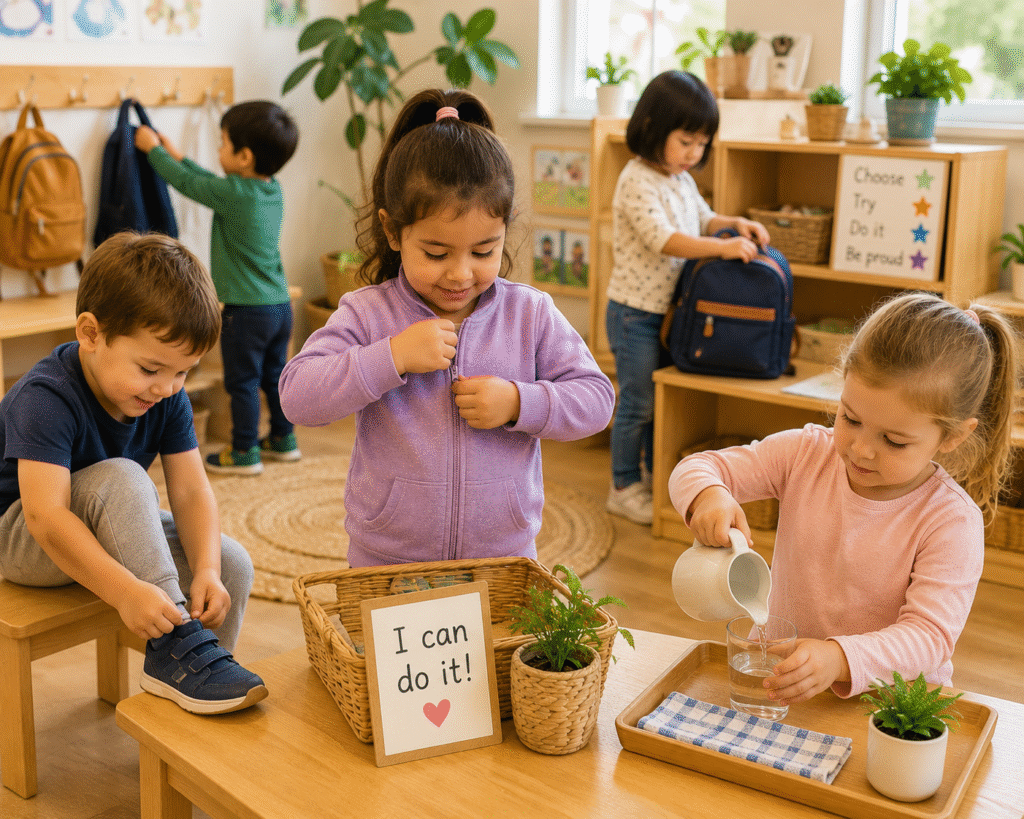
Social confidence is closely connected to a child’s growing independence.
Simple responsibilities at home can help children feel capable and encourage them to participate more confidently in unfamiliar environments.
Depending on their age, children can practise:
- Putting toys away.
- Carrying their own small bag.
- Choosing between two clothing options.
- Washing their hands independently.
- Packing away books after reading.
- Helping set the table.
- Putting belongings in their usual place.
These small tasks allow children to practise following instructions, making decisions, and completing activities independently.
Parents can also encourage children to try something before immediately stepping in to help.
Instead of saying, “Let me do it,” try saying, “Would you like to have a go first?”
Giving children reasonable opportunities to try, make mistakes, and try again can build self-confidence and independence.
How Play Supports Social Skills
Play is one of the most effective ways young children practise social behaviour.
During pretend play, children can experiment with different roles and situations. When playing with blocks, they can work together to create something. During outdoor games, they can practise rules and turn-taking. In group activities, they learn to listen, communicate, and cooperate.
This is why play-based learning is an important part of early childhood education.
Children are developing multiple skills at the same time. A simple game may involve physical movement, language, problem-solving, emotional regulation, and social interaction.
For parents exploring daycare Prestons, looking at the types of play experiences offered can provide useful insight into how a centre supports children’s overall development.
Preparing Your Child for Group Learning
Preschool introduces children to a new social environment where they may spend time with educators and a larger group of children.
They may need to:
- Follow simple group instructions.
- Listen while another person is speaking.
- Participate in group activities.
- Wait for their turn.
- Ask an educator for help.
- Make new friends.
- Follow familiar routines.
- Move between different activities.
Parents can gently introduce some of these experiences at home without making preparation feel like formal schoolwork.
For example, you could read a story together and ask your child to listen until the end, play a game involving turns, or encourage them to help complete a simple two-step instruction.
These everyday experiences can help children become familiar with listening, following directions, and participating with others.
Choosing an Early Learning Environment
The environment children experience during their early years can play an important role in their social and emotional development.
When comparing early learning services, parents may want to consider whether educators create opportunities for children to build relationships, express themselves, participate in group activities, and develop independence.
A supportive environment can help children feel secure while gradually encouraging them to interact with others and explore new experiences.
Families preparing for the next stage of early education may also be researching options for kindergarten Prestons. Understanding how a centre approaches children’s social, emotional, physical, and cognitive development can help parents make a more informed decision.
Social Skills Develop Through Everyday Experiences
Preparing a child for preschool is not about making sure they can already do everything independently. Children develop at different rates, and social skills continue to grow throughout the early years.
What matters is giving children regular opportunities to practise.
A conversation about feelings, a game with a sibling, a playdate with a friend, or helping to pack away toys can all become meaningful learning experiences.
By encouraging communication, turn-taking, empathy, problem-solving, independence, and positive interactions, parents can help children build a strong foundation for their preschool years.
Most importantly, social learning should feel enjoyable rather than pressured. Children learn through repetition, observation, play, and positive relationships. With patient support from parents and educators, they can gradually develop the confidence and skills needed to participate in their early learning community.
Key Takeaways for Parents
Supporting your child’s social development before preschool can be simple and part of everyday family life.
Remember to:
- Practise sharing and turn-taking through games and daily activities.
- Talk about emotions and give children words to express how they feel.
- Provide opportunities for peer interaction through playdates and group activities.
- Teach simple conflict-resolution phrases children can use when disagreements occur.
- Encourage independence through age-appropriate responsibilities.
These small steps can help children feel more confident communicating, cooperating, and forming relationships as they begin their preschool journey.


