
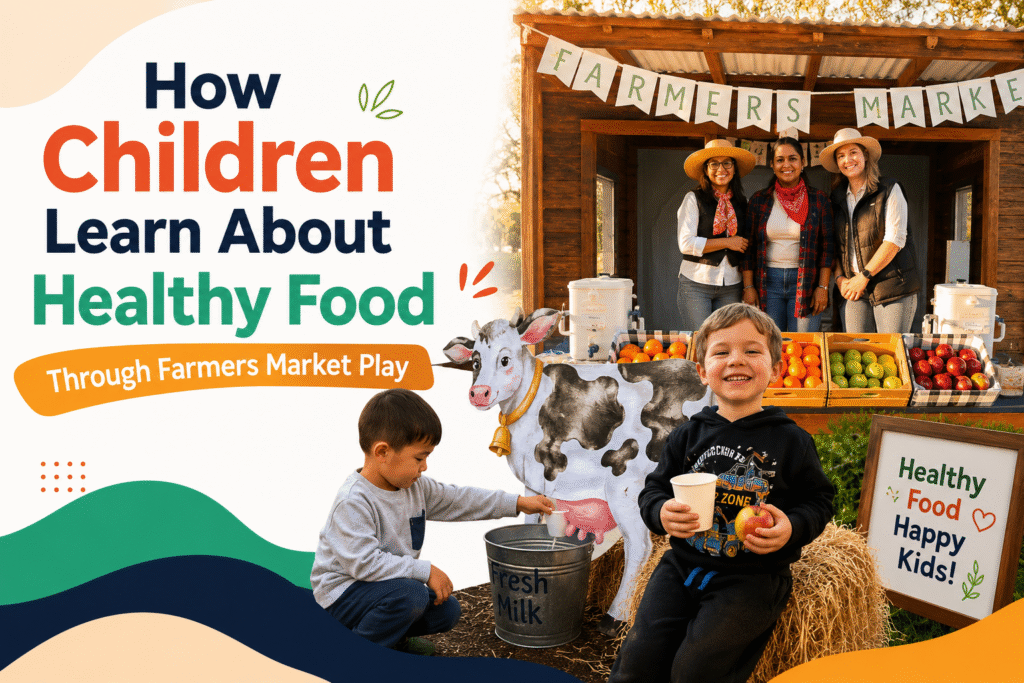
Children are naturally curious about the world around them, and food can become an exciting part of their everyday learning. A farmers market play experience allows children to explore fruits, vegetables, shopping, farming and healthy food choices through imaginative and hands-on activities. In a childcare kellyville environment, educators can create a colourful market where children pretend to be farmers, shoppers or stall owners. They can sort fresh produce, count fruits, explore colours and textures, and talk about where food comes from. These simple experiences make healthy food education enjoyable while supporting communication, creativity, social interaction and early problem-solving skills.
Exploring Fruits and Vegetables Through Play
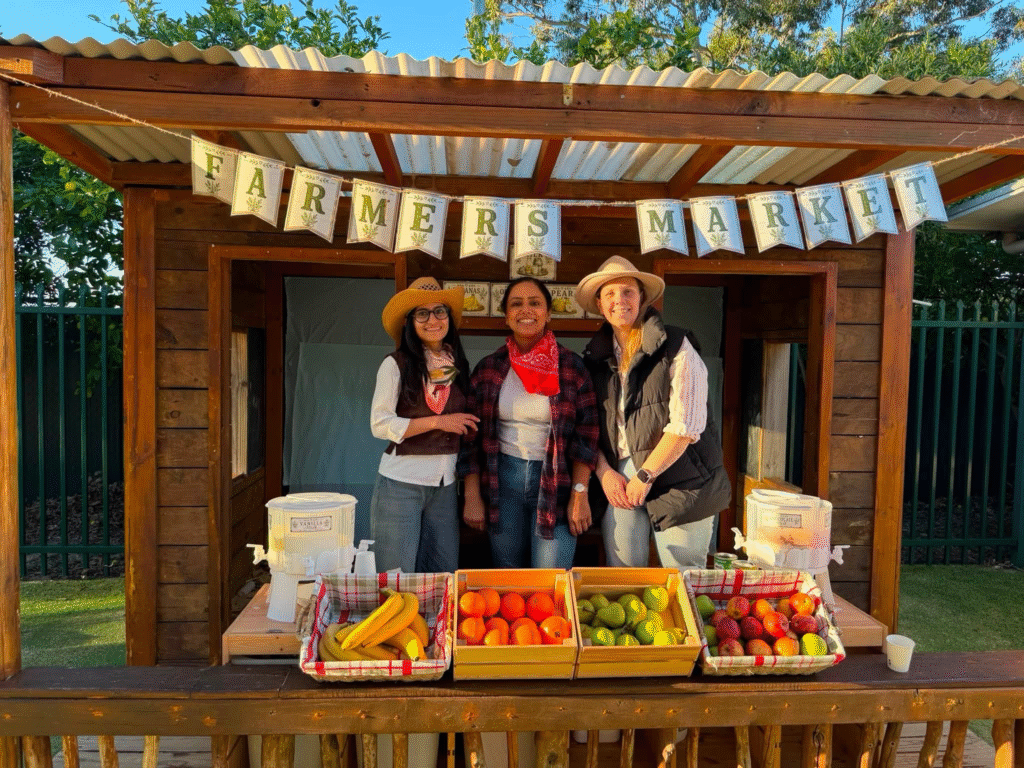
Farmers market play gives children an opportunity to become familiar with a wide variety of fruits and vegetables. Educators can arrange colourful produce in baskets and encourage children to identify different items. They might compare a red apple with a green pear, examine the shape of an orange or talk about the texture of a cucumber.
Rather than simply telling children that fruits and vegetables are good for them, educators can allow them to discover these foods naturally. Children can touch, smell, observe and discuss different produce. This sensory exploration can help children become more comfortable with foods they may not have encountered before.
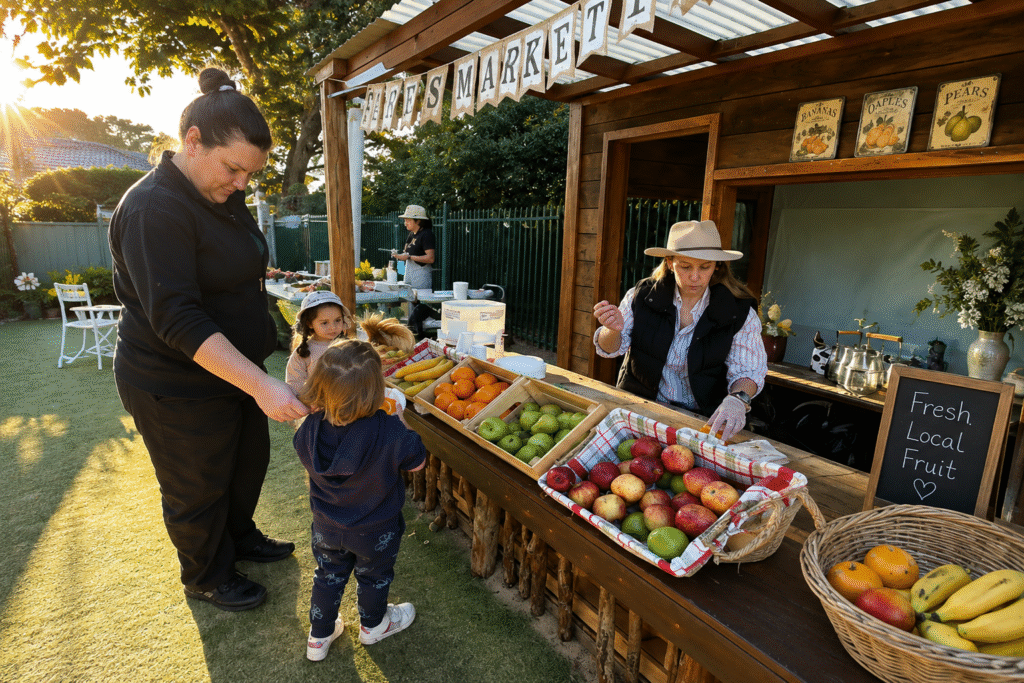
Role-play makes the experience even more engaging. One child can pretend to be a farmer while another becomes a customer. Children can practise choosing food, placing it into baskets and pretending to pay for their purchases. Through these simple interactions, healthy food becomes connected with fun and positive experiences.
Understanding Where Food Comes From
A farmers’ market activity can introduce children to the journey food takes before reaching their homes. At Childcare Services Dural, educators can explain that farmers grow fruits, vegetables and other foods, which can then be taken to markets for families to purchase.
This can lead to conversations about gardens, farms, plants, soil, water and sunlight. Children may begin to understand that food does not simply appear in a supermarket or on a plate. It has a journey that involves nature, people and care.
Educators can extend this learning by creating a small vegetable or herb garden. Children can help plant seeds, water plants and observe how they change over time. These experiences encourage patience and responsibility while strengthening children’s connection with nature.
Developing Healthy Food Awareness
For farmers’ market play, this can be an effective way to introduce healthy food concepts without making the experience feel like a formal lesson. Children can learn about variety by exploring different colours, shapes, and types of produce.
Educators can use simple questions to encourage curiosity and thinking. For example, they might ask, “Which fruit would you choose?”, “What colour is this vegetable?”, or “How does this apple feel?” These conversations encourage children to express their preferences and develop vocabulary related to food.
Children can also learn about making choices. A pretend shopping list might include apples, bananas, carrots and tomatoes. Children can search for each item and place it into their basket. This develops listening skills, memory and decision-making while keeping the activity playful.
Building Early Maths and Language Skills
Farmers market play can naturally incorporate early mathematics. Children can count how many apples are in a basket, compare which basket contains more produce or sort food according to colour and type.
Simple pretend money can also be introduced. Children might exchange play coins for fruits and vegetables, giving them an early understanding of numbers and everyday transactions. Educators can adapt the activity according to children’s developmental stages.
Language development is another important benefit. Children can learn words such as farmer, market, fresh, crunchy, sweet, sour, fruit and vegetable. They can describe what they see and hear their peers using different words to communicate their ideas.
Storytelling can further extend the activity. Educators might tell a story about a seed growing into a vegetable and travelling from a farm to a market. Children can then recreate the story through dramatic play.
Encouraging Social and Creative Learning
An Early Learning Centre can use farmers market play to create opportunities for children to cooperate and learn with their peers. Market activities encourage children to share resources, take turns, negotiate roles and communicate with one another.
Children can decide who will be the farmer, customer or market seller. They can create signs for their stalls, arrange pretend produce and decorate shopping bags. These creative experiences encourage imagination while supporting fine motor development.
The activity can also be connected with art. Children may draw their favourite fruits, paint vegetables or create colourful market displays. Combining food exploration with creative activities gives children multiple ways to express what they have learned.
Outdoor farm-themed activities can provide another extension. Children can pretend to collect vegetables from a garden, transport produce to the market or care for toy farm animals. These experiences can connect physical movement with imaginative learning.
Making Healthy Food Learning Meaningful
The most effective food learning experiences are those that connect with children’s everyday lives. Farmers market play allows children to explore healthy foods through experiences that feel familiar, enjoyable and purposeful.
Educators can continue the learning by discussing meals, seasonal produce and family food traditions. Children can share what fruits or vegetables they eat at home and listen to the preferences of their friends. This encourages respectful conversations and helps children understand that families may enjoy different foods.
Regular exposure to food-related learning can help children build curiosity and confidence. When healthy food is introduced through play, gardening, storytelling, sensory exploration and real-world experiences, children have many opportunities to develop their understanding.
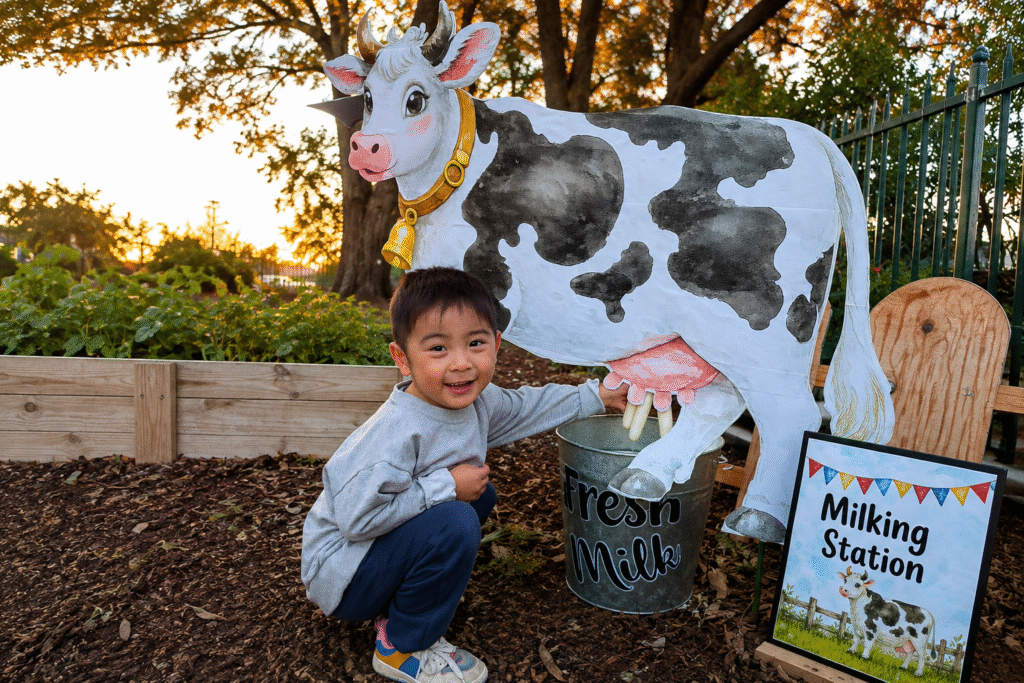
At Wiggles and Giggles Dural, farm-themed experiences such as farmers market play and milking activities can turn everyday learning into an exciting adventure. Children can explore fresh produce, imaginative role-play and hands-on experiences while developing important skills in a fun and engaging environment.
Frequently Asked Questions
Why is farmers market play beneficial for children?
Farmers market play combines imaginative play with learning. Children can explore fruits and vegetables while developing communication, mathematical thinking, social skills, creativity and decision-making.
How can educators make healthy food learning fun?
Educators can create pretend market stalls with fruits, vegetables, baskets, shopping bags and play money. Children can take different roles and explore food through games and conversations.
What can children learn from a farm-themed activity?
Children can learn about where food comes from, farming, nature, healthy food choices, community roles, counting, sorting, communication and cooperation.
Can farmers market play support early childhood development?
Yes. The activity can support several areas of development, including language, social interaction, cognitive skills, fine motor abilities, creativity and problem-solving.
How can parents continue the learning at home?
Families can involve children when shopping for produce, visit a local farmers market, grow herbs or vegetables at home, and encourage children to identify different fruits and vegetables.
How does farmers market play encourage curiosity about healthy foods?
It gives children a playful and pressure-free way to explore different foods. By seeing, touching, sorting and talking about produce, children can develop familiarity and curiosity about healthy food.


