
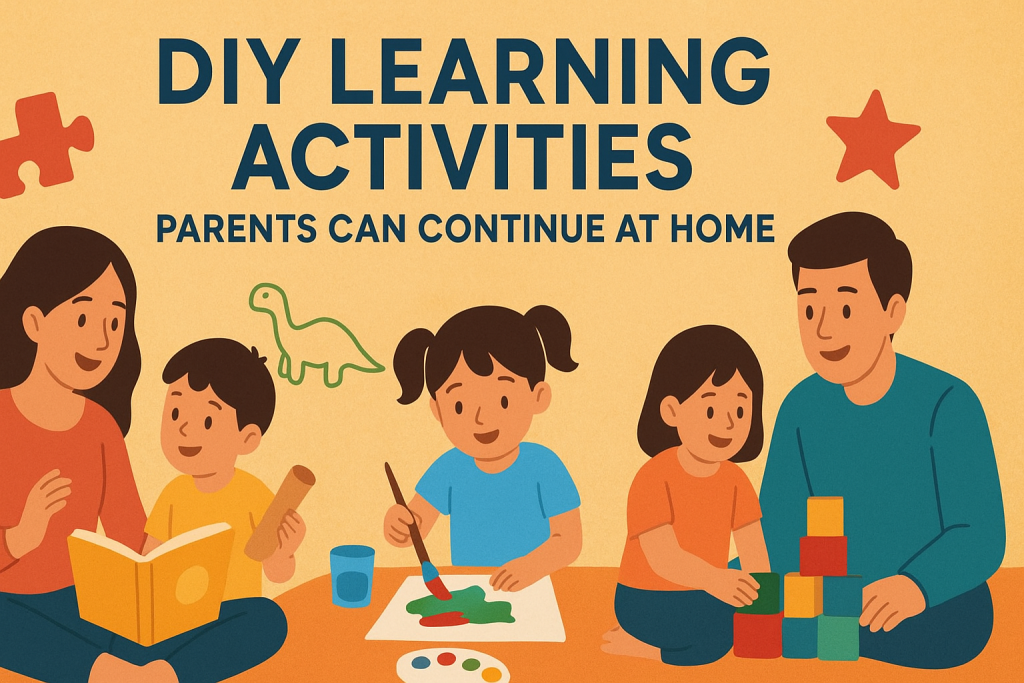
For many parents, the question isn’t just about finding the right early learning centre for their child—it’s about how to keep learning alive at home. The skills children develop in a childcare setting, from problem-solving and literacy to creativity and social confidence, can be reinforced through simple DIY learning activities at home. Continuity between home and early learning environments is key to fostering curiosity and ensuring that children feel confident exploring new ideas.
The good news is that extending learning at home doesn’t need to be complicated or costly. With everyday household items and a little imagination, parents can create fun, engaging, and educational experiences that complement what children learn in early education programs. From reading stories together to experimenting with water, counting toys, or painting with recycled materials, these hands-on activities help children explore, experiment, and grow.
By integrating small, practical DIY learning activities into daily routines, parents can support literacy, numeracy, creativity, problem-solving, and motor skills. This blog aims to provide parents in Childcare Dural and surrounding areas with actionable ideas that are easy to implement, enjoyable for children, and aligned with the learning principles promoted in professional early learning settings.
Understanding the Value of Learning at Home
Learning doesn’t stop when children leave their early learning centre. In fact, the skills and habits developed in these settings can be reinforced and extended at home, helping children develop confidence and curiosity. Parents are their child’s first and most important teachers, and home-based learning activities provide opportunities to practice communication, social skills, and independence.
Supporting children’s development at home allows for personalised learning experiences. Parents can focus on their child’s interests, pace, and strengths, creating a nurturing environment where curiosity is encouraged and mistakes are seen as learning opportunities. Activities such as cooking together, gardening, or even simple conversations about daily experiences can complement the structured programs offered by early learning centres.
Moreover, children benefit emotionally when learning is shared with their parents. The encouragement, praise, and involvement of caregivers strengthen bonds and reinforce the idea that learning is a positive, enjoyable experience rather than a chore.
DIY Literacy Activities
Building literacy at home can be both fun and creative. Storytelling, reading, and word games help children develop vocabulary, comprehension, and a love for language.
Some practical ideas include:
- Storytelling with everyday objects: Encourage your child to pick up random household items and create a story around them. For example, a spoon could become a magical wand or a toy car could start an adventure.
- Letter and word games: Use sticky notes or paper to write letters and simple words. Play matching or memory games, or let children arrange letters to form their own words.
- Reading together: Make reading a daily habit, even for 10–15 minutes. Let your child choose the book and discuss the story afterwards to build comprehension.
These activities mirror techniques used in day care centres, providing continuity between home and the structured learning environment while keeping literacy development playful and interactive.
DIY Numeracy Activities
Numbers, patterns, and problem-solving can easily become part of everyday life. Hands-on activities help children understand concepts practically rather than abstractly.
Try these ideas:
- Counting games: Use toys, buttons, or fruit to count objects, sort them into groups, or make simple addition/subtraction games.
- Sorting and matching: Sort items by colour, shape, or size. This encourages observation and classification skills.
- Cooking activities: Measure ingredients together when preparing a snack or meal. Children learn concepts like volume, weight, and fractions in a meaningful context.
Practical, hands-on learning is a staple in childcare service centre in dural, and replicating these experiences at home helps children see the real-world application of numeracy skills while keeping them engaged and motivated.
DIY Science and Discovery Activities
Science is everywhere, and children love exploring the world around them. Simple experiments and observation activities can spark curiosity and critical thinking.
Ideas to try include:
- Water experiments: Explore floating and sinking with household items, or mix colours with food colouring and water.
- Magnet play: Use magnets to discover what objects are magnetic and encourage prediction and experimentation.
- Nature walks: Observe plants, insects, and animals. Encourage children to describe what they see, touch, and hear.
- Sensory play: Fill containers with sand, rice, or water for tactile exploration. Add scoops, cups, and small toys to encourage experimentation.
Encouraging exploration and asking open-ended questions fosters a scientific mindset and mirrors activities that children enjoy in Childcare Dural, making learning an exciting adventure.
DIY Creative Arts and Craft Activities
Creativity is vital for problem-solving and self-expression. Children thrive when they can explore their imagination without worrying about perfection.
Activities to encourage artistic expression include:
- Painting and drawing: Use different tools like brushes, sponges, or fingers to create artwork.
- Collage making: Collect recyclable materials, fabrics, or leaves to create unique compositions.
- Music and movement: Dance to favourite songs or create simple instruments with containers and rice.
- Building projects: Use blocks, LEGO, or household items to construct and invent.
Activities similar to those offered in early learning centres allow children to express themselves freely, develop fine motor skills, and enjoy the process of creation without focusing solely on the finished product.
DIY Physical and Motor Skill Activities
Physical activity supports coordination, confidence, and overall health. Even short, playful sessions can improve motor skills and encourage active exploration.
Some ideas include:
- Indoor obstacle courses: Use cushions, chairs, and soft toys to create challenges that encourage balance and movement.
- Ball games: Throwing, catching, or rolling balls improves hand-eye coordination.
- Fine motor activities: Threading beads, cutting shapes, or building with small blocks enhances dexterity and control.
Engaging in these activities at home complements what children experience in day care centres, reinforcing skills in a fun, safe, and supportive environment.
Creating a Routine for Home Learning
Consistency matters more than intensity. Short, regular sessions integrated into daily life are more effective than occasional, lengthy learning periods.
Tips for creating a routine:
- Schedule learning in small, manageable chunks—10 to 20 minutes is often enough.
- Mix activities with meals, playtime, or outdoor walks to keep learning natural and engaging.
- Flexibility is key; allow children to lead and adapt activities to their interests.
- Celebrate small achievements to reinforce a positive learning experience.
Routine helps children anticipate learning moments and builds independence, echoing the structure provided by professional childcare service centres without adding pressure or stress.
Encouraging Parental Engagement
Parents play a central role in fostering curiosity and motivation. Being an engaged learning partner strengthens emotional bonds and enhances educational outcomes.
Ways to actively engage:
- Show enthusiasm and curiosity alongside your child.
- Ask open-ended questions to encourage thinking.
- Follow your child’s interests and allow exploration in their chosen area.
- Celebrate achievements, no matter how small, to build confidence and a love for learning.
The consistent involvement of parents mirrors the supportive environment children experience in Childcare Dural, reinforcing the idea that learning is both meaningful and enjoyable.
Conclusion
Continuing learning at home doesn’t have to be complicated. With a few simple, hands-on activities, parents can support literacy, numeracy, creativity, science, and physical development. Storytelling, counting games, nature experiments, arts and crafts, and active play all provide rich learning opportunities that complement early learning programs.
Starting small, observing your child’s interests, and incorporating learning into everyday routines can make a big difference in development and confidence. For families in Dural, Wiggles and Giggles is a trusted early learning centre that encourages continuity between home and centre-based learning. Parents can explore further resources, tips, and guidance from the centre to enrich their child’s learning journey even outside the classroom.


